
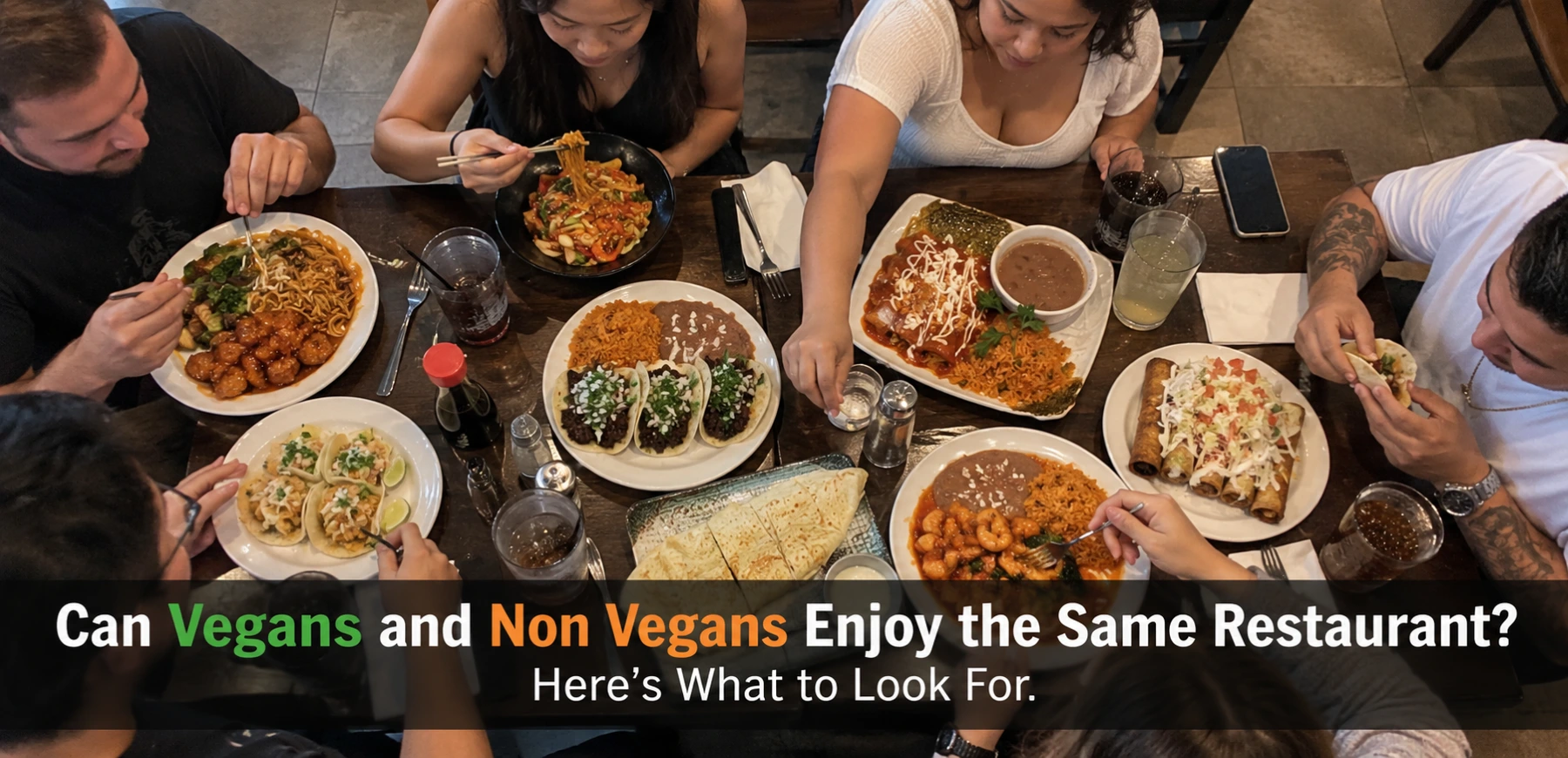
So, can vegans and non-vegans actually enjoy the same restaurant? Absolutely, and mixed groups prove it every day. The key is what to look for: a menu that gives vegan diners real, satisfying choices, familiar comfort dishes that win over everyone else, and enough variety across cuisines that nobody at the table has to compromise.
Key Takeaways
- Vegans and non-vegans can share a table when a restaurant offers meaningful choices for both diets, not just a single token dish.
- Menu variety, familiar formats, and more than one cuisine make mixed diet dining easier for everyone involved.
- Sunny Express GFF in Compton serves both vegan and traditional Mexican and Chinese dishes, giving mixed groups options on a single menu.
- Familiar dishes such as tacos, fried rice, and chow mein can make a mixed menu approachable for diners with different food preferences.
Can Vegans and Non Vegans Really Share a Table?
Yes. Mixed diet groups can enjoy the same restaurant when the menu offers meaningful choices for everyone. Vegan diners benefit from having more than one plant based option, while non vegan diners can still choose familiar dishes that fit their preferences. A restaurant with enough variety makes it easier for everyone to order something they actually want.
Nobody needs to follow the same diet to enjoy a meal together. What matters is having a menu with enough variety to accommodate different preferences without making anyone feel limited. Restaurants that offer both plant based and traditional dishes, like Sunny Express in Compton, can give mixed groups the flexibility to enjoy one dining experience together.
Do meat-eaters actually enjoy vegan Mexican and Chinese food?
Plenty do, once the guesswork gets removed. Familiar formats, tacos, fried rice, chow mein, make the transition easy because the shapes and flavors already feel like home, even when the ingredients are plant-based.
What makes a restaurant a good pick for a mixed group?
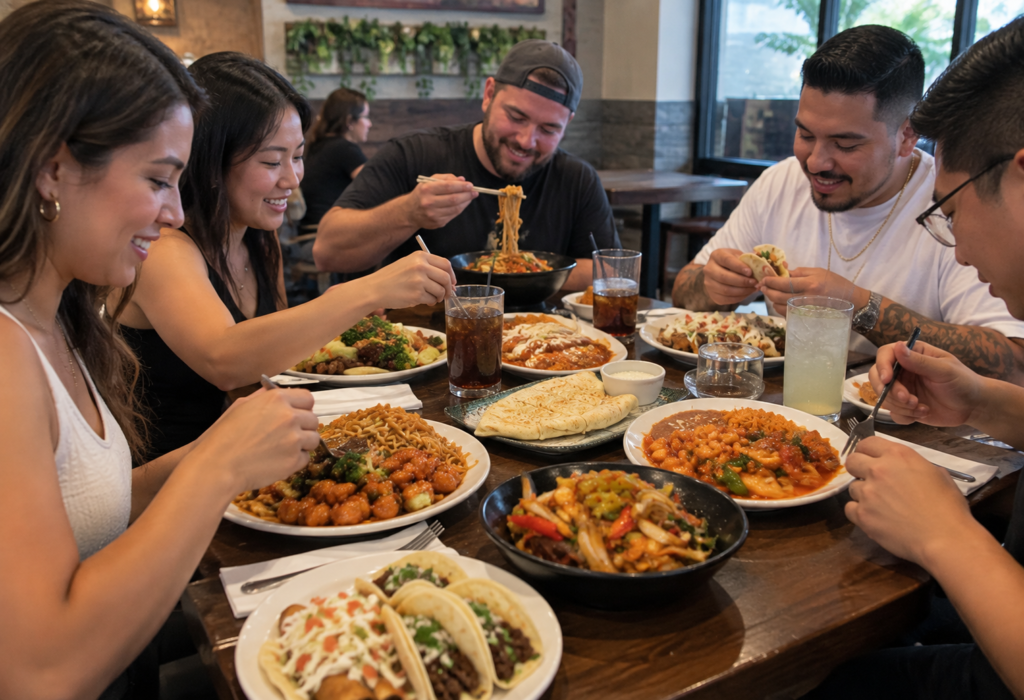
A restaurant built for vegan friendly Mexican and Chinese food works because it blends cuisines and diets under one roof instead of forcing a choice. That combo means:
- Vegan diners get real plant-based dishes built for them on the same menu
- Non-vegan diners keep access to traditional favorites they already love
- Families get enough variety that picky eaters and adventurous ones both find something
Searching for plant based dining out options has never had to mean sacrificing group harmony. One table, more than one way to eat, zero drama, that’s the whole idea behind good mixed diet dining.
What Makes a Restaurant Truly Vegan and Non-Vegan Friendly?
Real inclusivity starts with menu depth on both sides, not a single token salad hiding at the bottom of the page. A genuine vegan and non vegan friendly restaurant builds full plates around plant-based proteins while still offering the traditional dishes non-vegan guests expect, and makes sure every guest at the table finds something craveable.
Take a dish like Vegan Shrimp Fried as an example. Plant-based shrimp gets stir-fried with vibrant vegetables and savory sauces, delivering the same comfort as a traditional takeout favorite minus the animal products. That kind of culinary detail is what separates a restaurant that takes mixed diet dining seriously from a spot that just swaps in tofu and calls it a day.
Does a vegan-friendly spot need to please non-vegan guests too?
Absolutely, and the best ones plan for it. A well-rounded vegan and non vegan friendly restaurant experience means mixed-diet groups never have to compromise or split up to eat somewhere different. Keeping traditional, familiar dishes right alongside the plant-based mains gives every guest something recognizable to order.
What About Options for Flexitarians?
Flexitarians can benefit from restaurants that offer both plant based and traditional choices without making the dining experience feel restrictive. Having a varied menu allows guests to choose based on what they are in the mood for, whether that means trying a plant based dish or sticking with a familiar favorite.
For mixed groups, this flexibility can make choosing a restaurant easier. Everyone can explore different options from the same menu without needing to follow the same dietary preferences.
What Makes Group Ordering Easier for Mixed Diets?
Group ordering works best when everyone can browse one menu and find their own dish without a separate conversation about what’s “allowed.” A party leader can put together one combined order well before anyone shows up hungry, with vegan diners and non-vegan diners each picking dishes from the same list. That’s the whole point of a vegan and non vegan friendly restaurant built for mixed groups: nobody has to compromise, and nobody has to order somewhere else.
Clear menu labeling helps too. When vegan and non-vegan dishes are marked plainly, groups spend less time asking questions and more time actually enjoying the meal.
What should a mixed group look for before ordering?
Look for a menu that clearly separates or labels vegan and non-vegan dishes, offers more than one cuisine, and includes familiar comfort foods alongside plant-based options. That combination makes it easy for every guest to order confidently without holding up the table.
Does it matter if a group orders a mix of vegan and non-vegan dishes?
Not at all. A couple with mixed diets, or a family testing the waters, can order a mix of vegan and traditional dishes from the same table without anyone feeling singled out. That flexibility is exactly what makes mixed diet dining work in practice, not just in theory.
Where Can Mixed Dining Groups Find Options in Compton?
Mixed dining groups looking for options in Compton can benefit from restaurants that offer meaningful choices for different dietary preferences. Instead of choosing a restaurant where one person has limited options, groups can look for menus that provide both plant based and traditional dishes.
Sunny Express is one local example, offering both plant based and non vegan options across Mexican and Chinese inspired food. This variety allows guests with different preferences to choose from the same menu while still enjoying a meal together.
What kind of food will guests actually find?
Expect the classics, available both ways. Guests can dig into vegan or traditional takes on Mexican and Chinese dishes, from tacos to saucy noodle plates, all built for bold flavor rather than restriction. Nobody at the table has to settle for a sad side salad while everyone else eats real food.
Is demand for mixed diet dining only a big-city trend?
Not anymore. Restaurants offering both vegan and non-vegan options have been showing up even in small towns far from major metro areas, which signals demand for vegan friendly Mexican and Chinese food keeps expanding well beyond Los Angeles or San Francisco. Compton fits right into that shift.
For anyone comparing a vegan and non vegan friendly restaurant experience, the appeal is simple:
- One menu satisfies vegan diners and non-vegan diners alike
- No separate stops needed for different appetites
- Familiar comfort foods, offered alongside plant-based dishes, lower the barrier to trying something new
That combination is what makes mixed diet dining work.
What Should You Order for Your Next Group Outing?
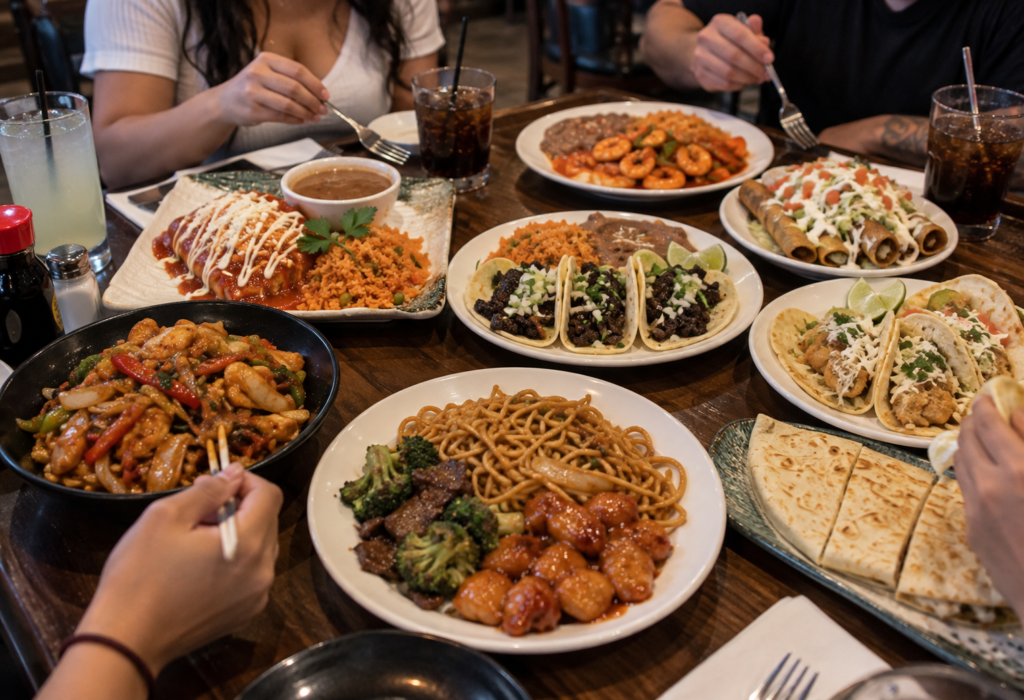
When ordering for a mixed group, variety is more important than choosing one dish for everyone. A menu with both plant based and traditional options allows each guest to choose something that fits their preferences while still enjoying the meal together.
At Sunny Express, groups can explore Mexican and Chinese inspired dishes across both plant based and non vegan options. Instead of building the entire order around one item, each person can choose based on what they are craving, making group dining simpler for everyone.
What makes ordering easy for a mixed group?
Groups don’t need everyone on the same diet to enjoy the meal together. Between a hearty shareable dish, a mix of vegan and traditional plates, and a menu that makes each option easy to spot, the table covers familiar comfort and something new to try at once.
Sample group order:
- One shareable dish, like a Vegan Sunny Burger, to split or size up per person
- A mix of vegan and traditional Mexican and Chinese plates, chosen per guest
- Enough variety that both vegan and non-vegan diners order without settling
That combination keeps the meal simple to order and enjoyable for everyone at the table.
FAQ
Can vegans and non-vegans eat at the same restaurant?
- Yes, mixed-diet groups regularly share tables at restaurants that offer real choices for both diets, like Sunny Express GFF in Compton. A menu with both vegan and traditional Mexican and Chinese dishes satisfies plant-based eaters while familiar comfort dishes keep everyone else happy too.
What menu items help non-vegans feel comfortable at a vegan-friendly restaurant?
- Familiar formats like tacos, fried rice, and chow mein ease the transition for meat-eaters. A dish like Vegan Shrimp Fried stir-fries plant-based shrimp with vegetables and savory sauces, delivering traditional takeout comfort, while the menu’s non-vegan dishes stay available for guests who want them.
Do I need to plan ahead if my group has both vegan and non-vegan eaters?
- Not much planning is needed when the restaurant already separates or labels vegan and non-vegan dishes clearly. Choosing a spot like Sunny Express in Compton, which lists both options on one menu, means the group can simply show up and order.
Conclusion
In closing, mixed diet dining works best when a restaurant treats both vegan and non-vegan guests as equally important, not as an afterthought. Whether you’re vegan, flexitarian, or just along for the meal, a menu that offers real choices on both sides means nobody has to compromise. When a restaurant like Sunny Express prioritizes flavor and variety across cuisines and diets, vegans and non-vegans alike discover they’re not settling. They’re just eating a good meal together.