
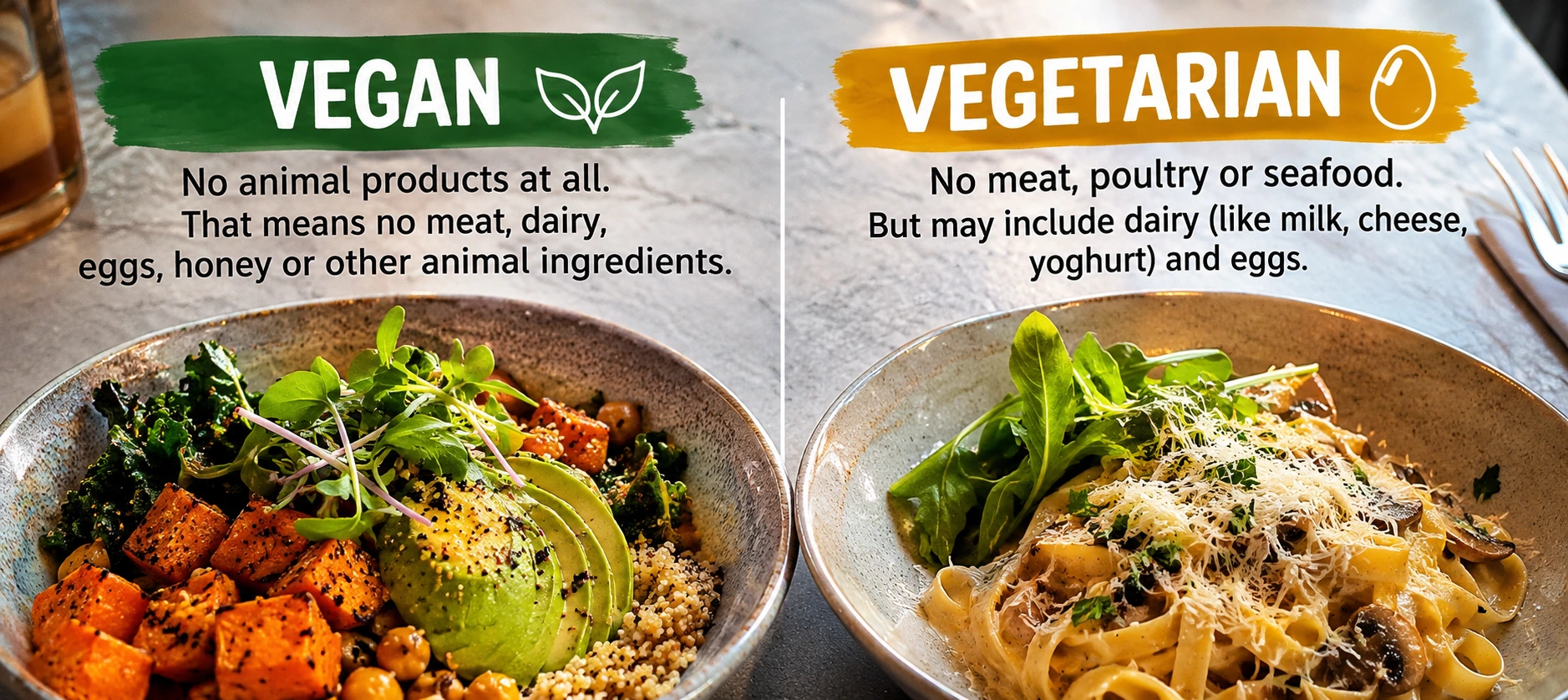
Reading a restaurant menu for vegan, vegetarian, or plant-based options starts with scanning for clear labels like “vegan,” “vegetarian,” or “plant-based.” These terms aren’t interchangeable, and a dish labeled one way doesn’t always meet the standards of another. Diners should also ask about hidden animal ingredients in sauces or broths, since even a seemingly plant-forward dish can contain dairy, eggs, or honey.
Key Takeaways
- Vegan dishes exclude all animal-derived ingredients, including dairy, eggs, and honey; vegetarian dishes typically skip meat and fish but may still include those ingredients.
- “Plant-based” describes a dish built mainly around vegetables, grains, or legumes, but it isn’t automatically the same as vegan.
- Always check individual menu items or ask staff directly when a dish needs to meet strict dietary requirements.
- Hidden animal ingredients often hide in sauces, broths, batters, and cooking oils, not just the main protein.
What’s the difference between vegan and vegetarian?
The difference between vegan and vegetarian diets comes down to which animal products get excluded. Vegetarians avoid meat, poultry, and fish but often still eat eggs, dairy, and honey. Vegans eliminate all animal-derived products, including dairy, eggs, and honey, along with meat and fish. Navigating a vegan vs vegetarian restaurant menu gets simpler once a diner knows that distinction; without it, guests risk ordering a dish that conflicts with their dietary needs.
“Plant-based” adds a third layer of nuance. The term usually describes a dish centered on vegetables, grains, legumes, or fruit, but it doesn’t come with the same strict guarantees as “vegan.” A plant-based dish can still be cooked with butter, finished with a dairy-based sauce, or fried in oil shared with animal products. Diners who need a dish to be fully vegan should treat “plant-based” as a starting point for a question, not a guarantee.
How do menus label vegan and vegetarian options?
Restaurants use symbols, separate sections, or ingredient callouts to mark dishes. A leaf icon often signals vegan items, while a “V” or “VG” might mean vegetarian; the exact symbols vary by restaurant, so reading the fine print matters. Kitchen practices also vary: some restaurants prepare vegan and non-vegan dishes on shared equipment, like fryers or prep surfaces, which matters to diners with strict dietary needs. Rather than assume, it’s worth asking a restaurant directly how it handles shared preparation.
What should diners look for when ordering?
- Scan the menu for dedicated vegan or vegetarian sections first, and check whether “plant-based” items are also labeled vegan.
- Check ingredient lists for hidden animal products like butter, cream, honey, or fish sauce.
- Ask staff about cooking methods when the menu lacks clear labels, especially for dishes marked only “plant-based” or “plant-forward.”
The interest in plant-based foods continues to grow, and it isn’t just vegans and vegetarians driving the push. Many consumers, omnivores included, want to add more vegetable-based dishes to their diet, according to WebstaurantStore’s Vegan Menu Ideas report. This shift means more restaurants now offer clearly marked plant-based choices, even if their full menu isn’t vegan.
How do you spot hidden animal ingredients on a menu?
Spotting hidden animal ingredients starts with reading beyond the dish name. Clear menu labeling ranks among the top priorities for nearly 300 professional chefs and operators, according to the National Restaurant Association’s 2026 What’s Hot Culinary Forecast. Diners who skip the fine print risk missing dairy, eggs, honey, or fish sauce tucked into sauces, batters, and broths.
What questions should diners ask servers about menu items?
Servers hold the key to ingredient transparency. Guests benefit from asking a few direct questions. First, confirm whether a dish contains butter, cream, or cheese. Second, ask about the cooking medium, since lard, chicken stock, and fish sauce hide in unexpected places. Third, ask whether fried items share oil with anything containing animal products; practices vary from kitchen to kitchen, so it’s a question worth asking rather than assuming.
What should diners ask about plant-based labels specifically?
A “plant-based” label is a helpful starting point, but it doesn’t always mean a dish is vegan. Diners should ask whether a plant-based dish contains any dairy, egg, or honey-based ingredients, and whether it’s prepared the same way as the restaurant’s non-vegan dishes. That one question clears up most of the confusion between vegan, vegetarian, and plant-based terminology.
What should you look for on a vegan restaurant menu?
A vegan restaurant menu signals its commitment through clear labeling and ingredient transparency. Diners scanning any menu should look for dishes marked specifically “vegan,” not just “plant-based,” since the two labels don’t always mean the same thing.
The difference between vegan and vegetarian menus comes down to dairy, eggs, and honey. Vegetarian dishes often include cheese or cream. Vegan dishes exclude all animal derivatives. This distinction matters when browsing any vegan vs vegetarian restaurant menu, because a dish labeled “plant-forward” can still contain ingredients a vegan diner avoids.
How can diners spot fully plant-based dishes quickly?
Look for explicit vegan markers next to menu items, rather than relying on dish names alone. A taco, chow mein plate, or dessert can be made with plant-based substitutes in some cases and traditional dairy or egg-based ingredients in others, even at the same restaurant. When a menu doesn’t spell this out, asking is the fastest way to know for sure.
What variety should diners expect from a vegan or plant-based menu?
A well-rounded vegan or plant-based menu typically spans savory entrées and desserts rather than a single dish. That range is worth checking for, since it usually signals a restaurant has thought through plant-based options across courses rather than offering just one substitution. Diners exploring new dishes should also check for preparation notes, which add confidence when trying something unfamiliar.
Where to find plant-based and vegetarian options in Compton
Sunny Express Gourmet Fast Food, located in Compton, California, serves a menu that blends Mexican and Chinese inspired dishes. The menu includes plant-based options, such as jackfruit-based specialties and a vegan carrot cake, alongside traditional non-vegan dishes. That mix is worth knowing before ordering: not every item on the menu is vegan or vegetarian, so confirming which dishes fit a specific diet matters here just as it does anywhere else.
Diners looking for plant-based or vegetarian choices in Compton can use the same approach covered above: scan for explicit labels, and ask about ingredients when a dish isn’t clearly marked.
How do you order plant-based food in Compton easily?
Ordering plant-based food in Compton comes down to the same habits that work anywhere: check the menu for clear labels, and confirm with the restaurant when something isn’t obvious.
What are the fastest ways to get vegan or vegetarian food in Compton?
The fastest route is checking a restaurant’s menu directly, in person or online, for dishes marked vegan, vegetarian, or plant-based, and asking a quick question about any dish that isn’t clearly labeled. At a restaurant like Sunny Express, where plant-based dishes sit alongside traditional Mexican and Chinese inspired dishes, that quick check matters more than at an all-vegan establishment.
How can diners confirm dietary options when ordering?
Diners with strict requirements should specify whether they need a dish to be vegan or simply vegetarian, since the two allow for different ingredients. It’s also worth asking whether a plant-based dish is prepared separately from non-vegan items, since kitchen practices vary by restaurant and aren’t something diners should assume either way.
FAQ
What is the difference between vegan and vegetarian menu options?
- Vegan dishes exclude all animal-derived ingredients, including dairy, eggs, and honey. Vegetarian dishes typically avoid meat and fish but may still include dairy, eggs, or other animal-derived ingredients depending on the dish.
Is “plant-based” the same thing as vegan?
- Not necessarily. “Plant-based” generally describes a dish built mainly around vegetables, grains, or legumes, but it doesn’t guarantee the complete absence of animal ingredients the way “vegan” does. Diners should confirm with the restaurant if a plant-based label needs to meet strict vegan standards.
What ingredients should diners watch for on a menu?
- Hidden dairy, eggs, honey, butter, and fish sauce commonly show up in sauces, broths, batters, and cooking oils, even in dishes that otherwise look vegan or vegetarian.
What should diners ask when ordering at a restaurant like Sunny Express?
- Since Sunny Express offers plant-based options alongside traditional non-vegan Mexican and Chinese inspired dishes, diners should ask which specific items are vegan or vegetarian rather than assuming the whole menu fits either category.
Does shared kitchen equipment affect vegan dishes?
- It can, depending on the restaurant. Diners with strict dietary needs may want to ask whether fryers or prep surfaces are shared between vegan and non-vegan items, since practices vary from one kitchen to the next.
Conclusion
Knowing the difference between vegan, vegetarian, and plant-based menu terms makes ordering out far less confusing. Vegan dishes exclude all animal-derived ingredients, vegetarian dishes may still include dairy or eggs, and “plant-based” sits somewhere in between, depending on how a specific restaurant uses the term. Sunny Express Gourmet Fast Food in Compton is one local example of a menu that includes plant-based choices alongside traditional non-vegan Mexican and Chinese inspired dishes, which is exactly the kind of menu where checking individual items pays off. When in doubt, ask.